Sewer and water line repair in Northeast Calgary
Trenchless sewer and water line repair and replacement across northeast Calgary, where most of the buried stock dates from the 1970s onward.
What is in the ground here
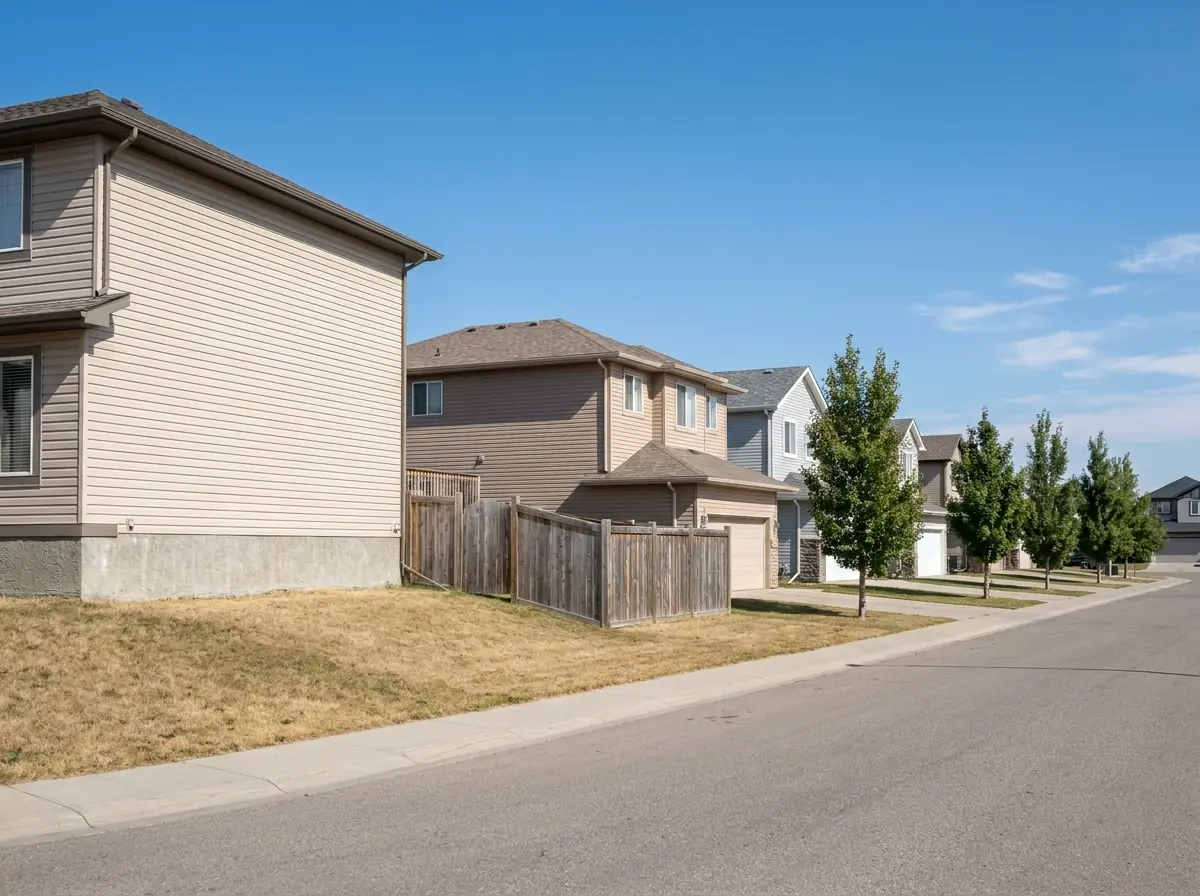
Apart from a handful of older communities near the centre, the northeast was largely built from the 1970s onward, which puts most of its buried laterals into plastic rather than clay. That changes what a service call here usually is: fewer end-of-life replacements, more blockages, bellies from original bedding that settled, and damage from something that was driven over a shallow run. It also means a recommendation to replace should be rarer here, and we hold to that.
Start with the conclusion, because it is the useful part: if you own a house in most of the northeast, your sanitary lateral is probably fine. Apart from a handful of communities near the centre, this quadrant was built from the 1970s onward, and that puts the buried line into plastic rather than jointed clay. Plastic is chemically inert and arrives in long lengths, so there is very little for a root to find and nothing for corrosion to work on. The material rarely fails on its own. What fails is the installation: a belly where bedding settled and now holds standing water, a crushed section where something was driven over it, or a joint that was cold-welded badly on the day. None of those are the pipe wearing out. They are things that happened to it, and most of them happened on the day it went in the ground.
So what does go wrong here? Realistically: a soft blockage that has built up over years and finally closed the run; a low spot where the bedding settled and water now sits permanently; one gasket that was not seated properly and has admitted a single root; or a section crushed by something heavy driven over a shallow run during landscaping or a driveway job. Every one of those is a specific, locatable event. The verdict that follows from that is short: Where the camera shows PVC and a single blockage, the answer is usually a cleaning rather than a replacement. If we put a camera down your line and it comes back a clean plastic run with one obstruction in it, we will clear the obstruction, show you the footage, and that is the entire job.
There are two honest qualifications. The first is that the older communities near the centre of the city genuinely predate all of this, and on those streets clay and iron are live possibilities with the failure patterns that come with them — the exception is real but it is geographically small and specific. The second is that finding a defect in a plastic line does not automatically make it a trenchless job. Lining is the wrong answer for a bellied line, and the reason is mechanical: a liner follows the host, so it will faithfully reproduce the belly and the water will still sit in the same low spot afterwards. That is a bursting or a dig job. A belly needs the low spot taken out, not covered over, so even when there is something wrong here the right answer may be a short dig rather than the method we are named for.
Most likely under a Northeast Calgary property
Ordered most to least likely, with how each one fails. This is a generalisation about an area and never a statement about one address.
- ABScommon in Canadian construction from roughly the 1970s onward
- The material rarely fails on its own. What fails is the installation: a belly where bedding settled and now holds standing water, a crushed section where something was driven over it, or a joint that was cold-welded badly on the day.
- PVCcommon from roughly the 1970s and 1980s onward, and the default in newer construction
- Same story as ABS — the pipe outlives the problem. Bellies from poor bedding, crushing from heavy equipment over a shallow run, and root intrusion at a gasketed joint that was not seated properly.
- Vitrified claycommonly found in homes built before roughly the 1960s, and in some areas later than that
- It fails at the joints, not in the middle of the pipe. Every joint is a seam a root can find, and a mature boulevard tree has had decades to find all of them. Joints also offset as the ground moves, leaving a lip that catches everything passing over it.
- Cast ironcommon in mid-century construction, and still found in buildings of that period today
- It corrodes from the inside out. Scale builds on the pipe wall and narrows the bore until a line that was four inches is effectively passing two, and eventually the bottom of the pipe — where the flow sits — corrodes through entirely while the crown still looks fine.
Material and era are trade generalisations, not a record of what is under any particular property. What is actually in the ground at an address is settled by a camera, not by the year the house was built.
Who calls us from Northeast Calgary, and why
The call we get most often from this quadrant is a first backup in a house built somewhere between the 1980s and last decade. There is no history to it, nothing like it has happened before, and the owner is trying to work out whether this is a nuisance or the start of something expensive. Almost always it is the first one. The useful thing we can do is run a camera, put the footage on a screen, and let you see that the pipe is sound — which is worth more than our opinion, because you can see it yourself.
The second call is the one this page is really written for: somebody has already been told the line needs replacing and wants a second look before they agree to it. That is a completely reasonable thing to ask for and we are happy to be the second camera. Sometimes the first opinion is right — bellies are real, crushed sections are real, and the older northeast communities have genuine clay failures. But a recommendation to replace a plastic lateral in a community this young should have something specific behind it, and you are entitled to see what that something is.
Specific to Northeast Calgary
- Replacement should be rare here, and we hold to that
- A company whose recommendation is the same in Martindale as it is in Elbow Park is not reading the pipe, it is reading the price list. Most northeast laterals are decades away from needing anything structural.
- A belly is a defect, not a failure
- A low spot means the bedding under the pipe settled after it was laid. The pipe itself is doing fine. It matters, it will keep causing blockages, and it is a localised fix rather than a reason to replace a whole sound run.
- The exception sits near the centre
- The communities closest to downtown on this side of the city predate the plastics era and behave like inner-city Calgary rather than like the rest of the northeast. Everything on this page about young pipe stops applying there.
- Wide lots make the work easier, when there is work
- Northeast frontages and setbacks are generally more generous than the inner-city quadrants, so access for equipment is rarely the constraint. On the rare job here that does need replacing, the site is usually the least of the problems.
Permits and the authority
Permits here come from the City of Calgary, the same as anywhere else inside the city. In practice the permitting question comes up less often in the northeast than in the other quadrants, for the simple reason that most work here is cleaning and inspection rather than replacement, and a camera run does not disturb anything. When a job does turn into a replacement — in the older communities near the centre, or where a run has been physically damaged — that is the point at which the City's requirements need checking, and so does the separate question of how far the property owner's length of pipe extends. Both of those answers come from the City for your address.
Communities and districts we work in
Bridgeland · Renfrew · Winston Heights · Mayland Heights · Vista Heights · Rundle · Marlborough · Whitehorn · Temple · Pineridge · Monterey Park · Falconridge · Castleridge · Coral Springs · Martindale · Taradale · Saddle Ridge · Skyview Ranch · Redstone · Cornerstone
What we do in Northeast Calgary
Trenchless Sewer Repair
Sewer lines replaced from two pits, not a trench.
Drain Cleaning
Drains cleared, and an honest answer on why.
Water Line Replacement
New water service pulled through, lawn intact.
Water Line Repair
One leak in sound pipe is a repair, not a rebuild.
Commercial & Multi-Residential
Underground work scheduled around your tenants.
Every one of those pages describes the same work wherever it is done. What changes in Northeast Calgary is which of them you are likely to need, and that is what the rest of this page is about.
Questions we get asked everywhere
The general questions have the same answers in Northeast Calgary as they do anywhere else, so they are answered once, in full, on one page rather than restated here with the place name changed.
Next door
Tell us what the line is doing
What came out, where, and roughly how old the house is. Those three answers decide what gets loaded before anyone leaves the yard.