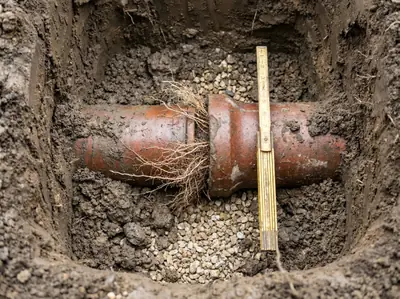
Vitrified clay
Also called clay tile, VCP, terracotta pipe
Sanitary lateral
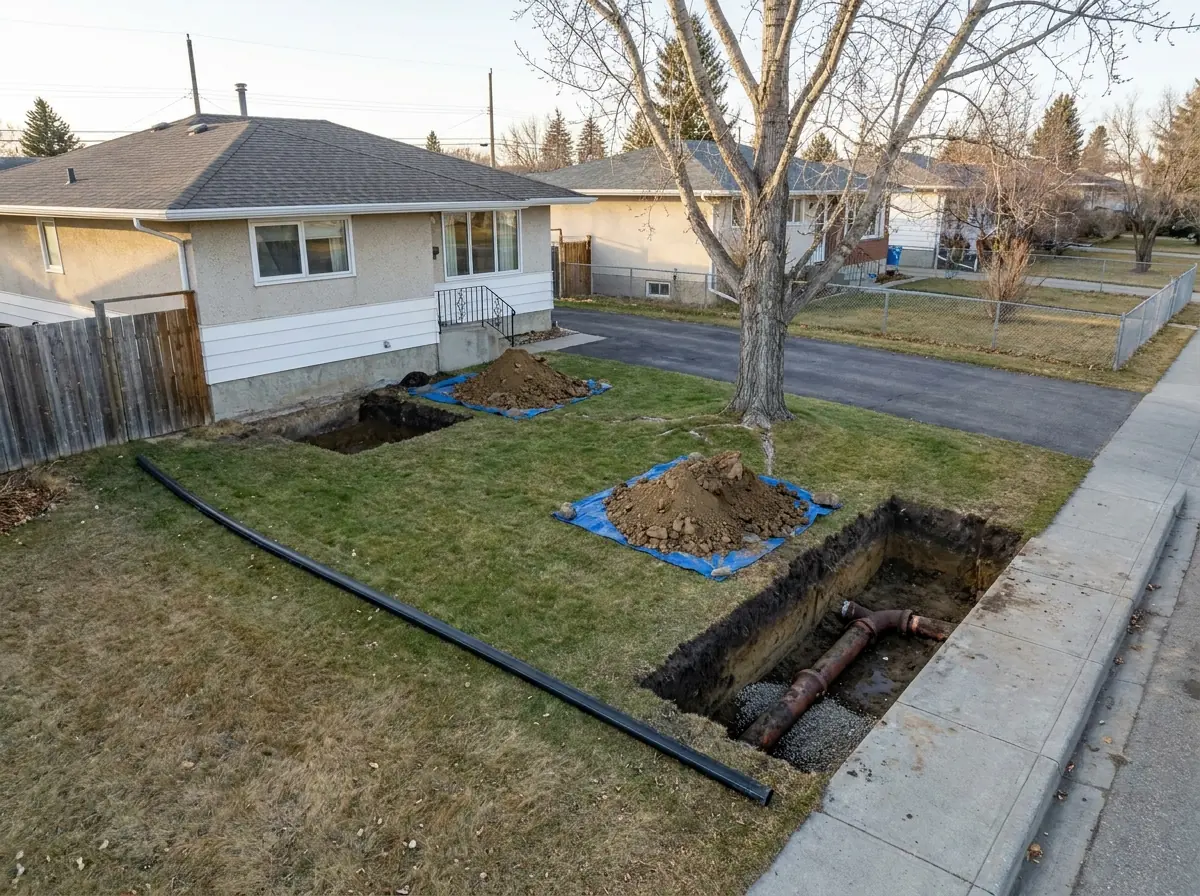
Fired clay pipe laid in short lengths — commonly two to four feet — with a bell-and-spigot joint between every one of them. The clay itself does not corrode and does not care how old it is.
- When it is commonly found
- commonly found in homes built before roughly the 1960s, and in some areas later than that
- Service life
- often still structurally sound at a hundred years, provided the joints have held — age alone is not a reason to replace clay
- How it fails
- It fails at the joints, not in the middle of the pipe. Every joint is a seam a root can find, and a mature boulevard tree has had decades to find all of them. Joints also offset as the ground moves, leaving a lip that catches everything passing over it.
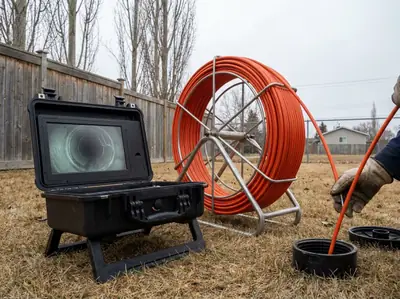
- What the camera shows
- Root masses entering at regular intervals, matching the joint spacing. Offset joints showing a step in the pipe wall. Often a long run of sound pipe between two bad joints.
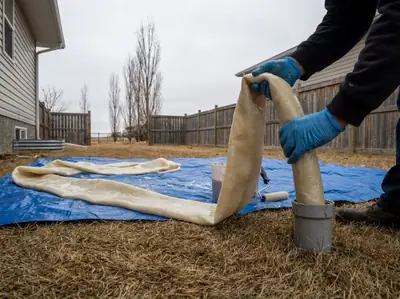
Can it be lined? Yes
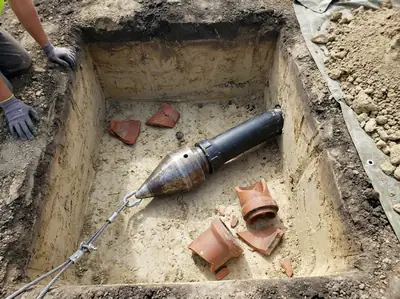
Can it be burst? Yes
Clay is the best trenchless host material there is: it is round, it holds its shape, and it breaks cleanly. It takes a liner well and it bursts predictably, so the camera decides which is cheaper rather than which is possible.