Sewer and water line repair in Southeast Calgary
Trenchless sewer and water line repair and replacement across southeast Calgary, which spans a wider range of construction eras than any other quadrant.
What is in the ground here
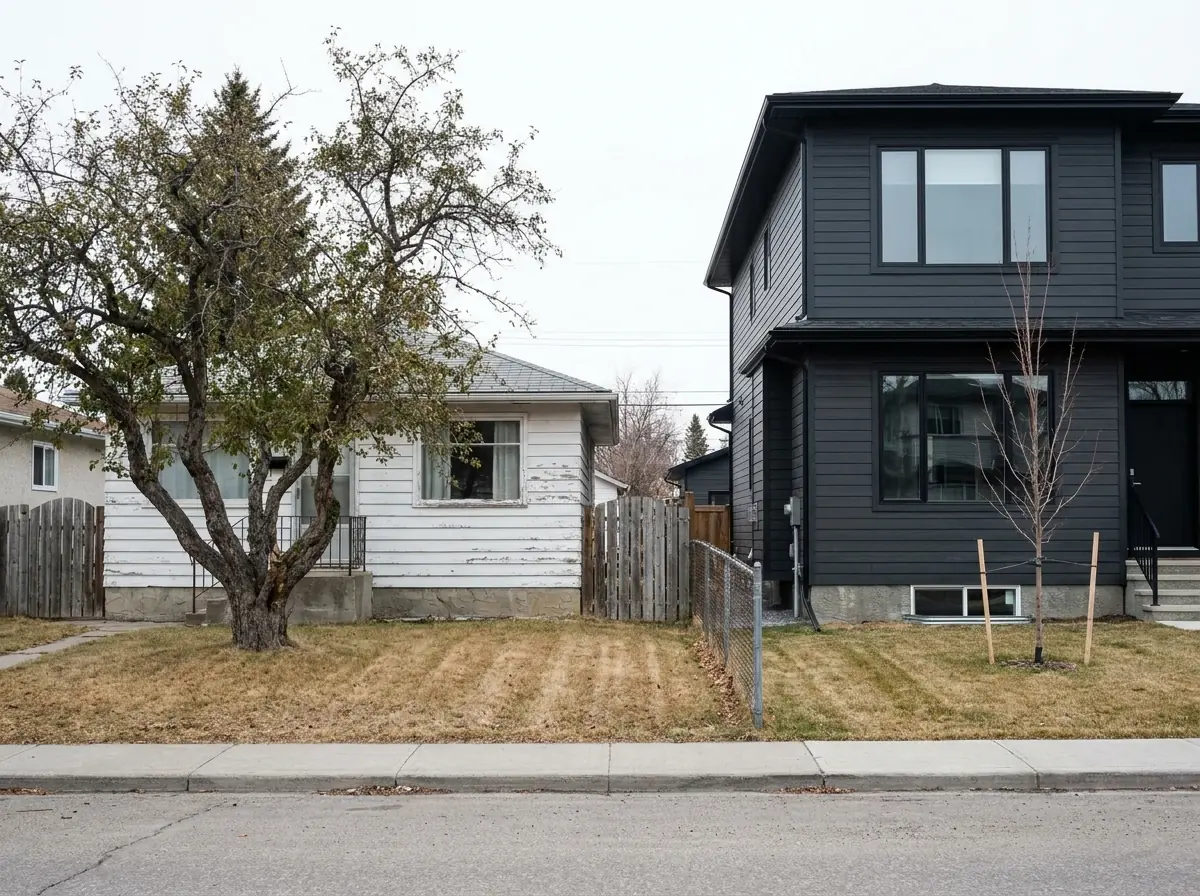
The southeast contains both extremes at once. Some of the city’s earliest residential streets sit close to the river, where clay and cast iron are the norm; the far south communities are among the newest in Calgary, where the buried line is plastic and barely into its service life. Two houses twenty minutes apart in this quadrant can need completely opposite advice, which is the whole reason we camera before quoting rather than after.
Put the two ends of this quadrant next to each other and the whole page explains itself. Clay is commonly found in homes built before roughly the 1960s, and in some areas later than that. PVC is common from roughly the 1970s and 1980s onward, and the default in newer construction. The southeast contains streets from well before the first of those dates and communities from well after the second, which is a wider span of buried pipe than any other quadrant in Calgary carries. There is no single sentence that is true across it. What there is instead is a pair of sentences, and the useful skill is knowing which one applies to the house in question.
At the river end — the old industrial-adjacent streets and the early residential grid near the Bow and the Elbow — the assumption is jointed pipe and the expected problem is intrusion and offset. Larger-diameter runs in this part of the city can also be concrete, which fails in a way worth understanding because it is counterintuitive: Sanitary gas attacks it. Hydrogen sulfide above the flow line converts to acid on the damp pipe crown and eats the cement matrix, so the top of the pipe degrades while the submerged bottom stays sound. Joints also offset and admit roots. A concrete line can therefore be sound where it is wet and degrading where it is dry, which is the opposite of what most people picture, and it is a finding that only comes off a camera.
At the far south end the picture inverts completely. These communities went in late enough that the buried lateral is plastic and is not remotely near the end of its life. What goes wrong there goes wrong for installation reasons rather than material ones — a low spot where bedding settled after the house was finished, a run crushed by something heavy over a shallow section during landscaping, a gasket that was not seated properly on the day. Two houses in this quadrant twenty minutes apart can need completely opposite recommendations, and the only thing that reliably tells them apart is what comes back on the camera.
Most likely under a Southeast Calgary property
Ordered most to least likely, with how each one fails. This is a generalisation about an area and never a statement about one address.
- Vitrified claycommonly found in homes built before roughly the 1960s, and in some areas later than that
- It fails at the joints, not in the middle of the pipe. Every joint is a seam a root can find, and a mature boulevard tree has had decades to find all of them. Joints also offset as the ground moves, leaving a lip that catches everything passing over it.
- Cast ironcommon in mid-century construction, and still found in buildings of that period today
- It corrodes from the inside out. Scale builds on the pipe wall and narrows the bore until a line that was four inches is effectively passing two, and eventually the bottom of the pipe — where the flow sits — corrodes through entirely while the crown still looks fine.
- Concreteused across much of the twentieth century, more often on larger-diameter runs than on house laterals
- Sanitary gas attacks it. Hydrogen sulfide above the flow line converts to acid on the damp pipe crown and eats the cement matrix, so the top of the pipe degrades while the submerged bottom stays sound. Joints also offset and admit roots.
- PVCcommon from roughly the 1970s and 1980s onward, and the default in newer construction
- Same story as ABS — the pipe outlives the problem. Bellies from poor bedding, crushing from heavy equipment over a shallow run, and root intrusion at a gasketed joint that was not seated properly.
- ABScommon in Canadian construction from roughly the 1970s onward
- The material rarely fails on its own. What fails is the installation: a belly where bedding settled and now holds standing water, a crushed section where something was driven over it, or a joint that was cold-welded badly on the day.
Material and era are trade generalisations, not a record of what is under any particular property. What is actually in the ground at an address is settled by a camera, not by the year the house was built.
Who calls us from Southeast Calgary, and why
The river-end caller usually arrives with history. Repeated backups, a line that has been snaked more than once, sometimes a previous contractor's opinion they want checked. That conversation is about method and scope: whether the run can host a liner, whether it is better burst, whether the damage is localised enough that only part of it needs anything at all. The answer is not the same for every old street down here, because "old" in the southeast covers several decades and more than one material.
The far-south caller is usually having their first problem ever and has no baseline to compare it against. That is the caller most at risk of being sold something, because a backup feels catastrophic when it has never happened before. In a community that young, the realistic list of causes is short and mostly ends in a cleaning. We would rather spend twenty minutes showing you a sound plastic run on a screen and clear the blockage than write a replacement quote, and if there is a belly in the line we will show you that too and be specific that it is a defect, not a failure.
Specific to Southeast Calgary
- The widest era span in the city
- No other Calgary quadrant puts pre-1920s streets and communities barely out of warranty inside the same boundary. It is the reason this page refuses to give one answer and the reason a camera is non-negotiable here.
- Run length differs as much as material
- The older river-end lots tend to be shallow with short runs to the main; the far-south lots are deeper with longer ones. Run length changes the economics of every trenchless method, sometimes more than the material does.
- Concrete shows up down here
- It is more common on larger-diameter runs than on house laterals, but the southeast is where we expect to encounter it. It lines well; bursting it is assessed case by case rather than assumed, because it does not fragment as predictably as clay.
- A young community is not a guaranteed one
- Installation-era defects surface early — in the first decade, not the fifth. Finding a belly in a ten-year-old line is not evidence that the line is wearing out. It is evidence about the day it was bedded.
Permits and the authority
Permits come from the City of Calgary at both ends of this quadrant, which is one of the very few things that does not change across it. What does change is the ground above the work: the older streets near the river tend to be tight frontages with established surfaces, while the far-south communities have wide lots, newer surfaces and more room to work in. That affects where access pits go and what has to be reinstated afterwards, and it is a site question we settle by walking the property rather than by assuming from the postal code.
Communities and districts we work in
Inglewood · Ramsay · Ogden · Albert Park · Forest Lawn · Dover · Erin Woods · Riverbend · Acadia · Willow Park · Lake Bonavista · Douglasdale · McKenzie Towne · Copperfield · New Brighton · Cranston · Auburn Bay · Mahogany · Seton
What we do in Southeast Calgary
Trenchless Sewer Repair
Sewer lines replaced from two pits, not a trench.
Drain Cleaning
Drains cleared, and an honest answer on why.
Water Line Replacement
New water service pulled through, lawn intact.
Water Line Repair
One leak in sound pipe is a repair, not a rebuild.
Commercial & Multi-Residential
Underground work scheduled around your tenants.
Every one of those pages describes the same work wherever it is done. What changes in Southeast Calgary is which of them you are likely to need, and that is what the rest of this page is about.
Questions we get asked everywhere
The general questions have the same answers in Southeast Calgary as they do anywhere else, so they are answered once, in full, on one page rather than restated here with the place name changed.
Next door
Tell us what the line is doing
What came out, where, and roughly how old the house is. Those three answers decide what gets loaded before anyone leaves the yard.