Is trenchless sewer repair worth it?
The question is asked as though trenchless were a product you either buy or do not. It is not. It is a way of getting at a pipe, and whether it is worth anything at all depends on what is sitting on top of that pipe and what the pipe itself turns out to be.
Here is the useful way to think about it.
You are not buying pipe. You are buying the yard staying where it is.
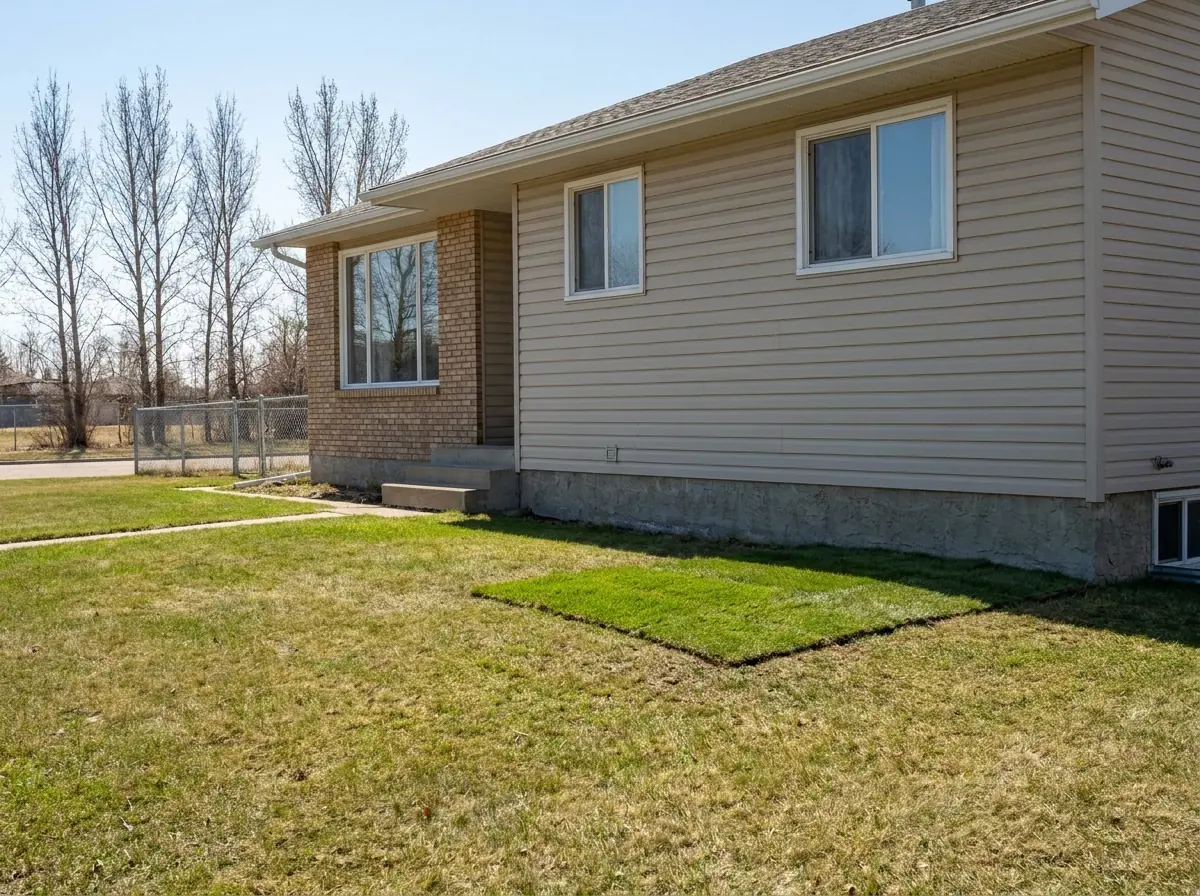
Replacing a sewer lateral the traditional way means an open trench along the length of the line. The pipe work in that trench is rarely the expensive part. The expensive part is everything the trench went through and everything that has to be put back: sod, driveway, walkway, a patio, a fence line, the root plate of a tree that took forty years to get that size.
Trenchless replaces the same pipe from two pits — one near the house, one out at the connection — and leaves the ground between them alone. So the arithmetic is simple in shape, if not in numbers:
Trenchless is worth it when the reinstatement you avoid is worth more than the equipment you mobilise.
That is the whole test. Everything else is detail on one side of it or the other.
When the answer is usually yes
- The run crosses a driveway, a walkway or a patio. Concrete comes out in one piece and goes back as a repair you can see from the street for the next twenty years.
- There is a mature tree between the house and the street, and its roots are in the ground the trench would have to occupy. Trenching there is not a landscaping problem. It is a tree problem, and often the tree loses.
- The line is deep. Trench cost does not rise in a straight line with depth — it rises with the shoring and the spoil volume that depth brings with it.
- The yard is finished. Irrigation, lighting, hardscape, planting that took a decade to fill in.
- The line is failing along its whole length rather than in one place. That is the condition the full-length methods exist for.
When the answer is honestly no
This is the part most pages on this subject leave out, so we will be direct about it.
- The run is short, shallow, and under bare lawn. Mobilising trenchless equipment for that can cost more than an excavator and a day. Sod is the cheapest thing on any property to put back.
- The line is in the wrong place, or at the wrong grade. Neither bursting nor lining can move a pipe. Bursting follows the path of the old line exactly. Lining reproduces the geometry it is given, which means a bellied line stays bellied and the water still stands in the same low spot afterwards. If the answer to your problem is “it needs to run somewhere else”, trenchless is not the tool.
- There is one defect and sound pipe either side of it. That is a spot repair or a short dig. Replacing the whole run because one joint failed is buying far more than the problem requires.
- The camera shows sound plastic pipe and a blockage. This is common in the newer communities and it is not a repair job at all. It is a cleaning, and anyone who quotes you a replacement off a blocked plastic line should be asked to show you the footage.
The two Calgarys
There is a real split in this city and it changes the answer.
Inside the older rings, sewer laterals are commonly vitrified clay, laid in short lengths with a joint every few feet, under one of the healthiest American elm populations anywhere in North America. Those lines genuinely fail, and they fail at the joints, and they do it at intervals that match the joint spacing. That is the population trenchless was invented for.
Out in the communities built from the 1980s onward, the same house has plastic pipe in long runs with almost nothing for a root to enter. A backup out there is usually a blockage, not a failure. We will say so on the day rather than sell past it.
What settles it
A camera survey, and nothing else. Not the age of the house, not what the neighbour had done, not what a plumber concluded from a snake hitting something.
The survey tells you four things that decide the whole question: what the pipe is made of, whether it still holds its shape, where the defects are along the run, and whether they are local or line-wide. A pipe that holds its shape can often be lined. One that does not has to be burst or dug. A pipe that is fine except for one spot wants neither.
We camera the line before we quote it. That sentence does more work than it looks like it does — it is the difference between a recommendation and a guess, and it is why a quote given over the phone for buried pipe is not a quote.
The short version
Trenchless is worth it when what is above the line is worth protecting and the pipe below it will take the method. It is not worth it on a short run under nothing, on a line that has to move, or on a pipe that is not actually broken.
If you want the method comparison rather than the decision, start with how the methods differ. If you want to know what moves the number, the cost page sets it out without printing a figure we cannot stand behind. And if you would rather read the case for digging, we wrote that one too: when you should just dig.
Want the line looked at?
Nothing here gets quoted off a description. The camera goes down first, you watch the screen, and you keep the footage — including on the jobs where the answer turns out to be that nothing needs replacing.